
Bible Passages
29 Now it happened at midnight that Yahweh struck all the firstborn in the land of Egypt, from the firstborn of Pharaoh who sat on his throne to the firstborn of the captive who was in the dungeon, and all the firstborn of cattle. 30 Then Pharaoh arose in the night, he and all his servants and all the Egyptians, and there was a great cry in Egypt, for there was no home where there was not someone dead. 31 Then he called for Moses and Aaron at night and said, “Rise up, get out from among my people, both you and the sons of Israel; and go, serve Yahweh, as you have spoken. 32 Take both your flocks and your herds, as you have spoken, and go, and bless me also.”
Exodus 12:29-32 (Legacy Standard Bible)
29 On the next day, he saw Jesus coming to him and said, “Behold, the Lamb of God who takes away the sin of the world! 30 This is He of whom I said, ‘After me comes a man who has been ahead of me, for He existed before me.’ 31 I did not know Him, but so that He might be manifested to Israel, I came baptizing with water.” 32And John bore witness saying, “I have beheld the Spirit descending as a dove out of heaven, and He abided on Him. 33 And I did not know Him, but He who sent me to baptize with water said to me, ‘The One upon whom you see the Spirit descending and abiding on Him, this is the One who baptizes with the Holy Spirit.’ 34 And I myself have seen, and have borne witness that this is the Son of God.”
John 1:29-34 (Legacy Standard Bible)
Devotion
During Lent, we hear a lot about the Lamb of God, the Last Supper, and the Cross. We know about the Exodus from Egypt, and the speculation that the Last Supper was a Passover Feast. We don’t often delve deeper into the parallels between Passover and the Crucifixion.
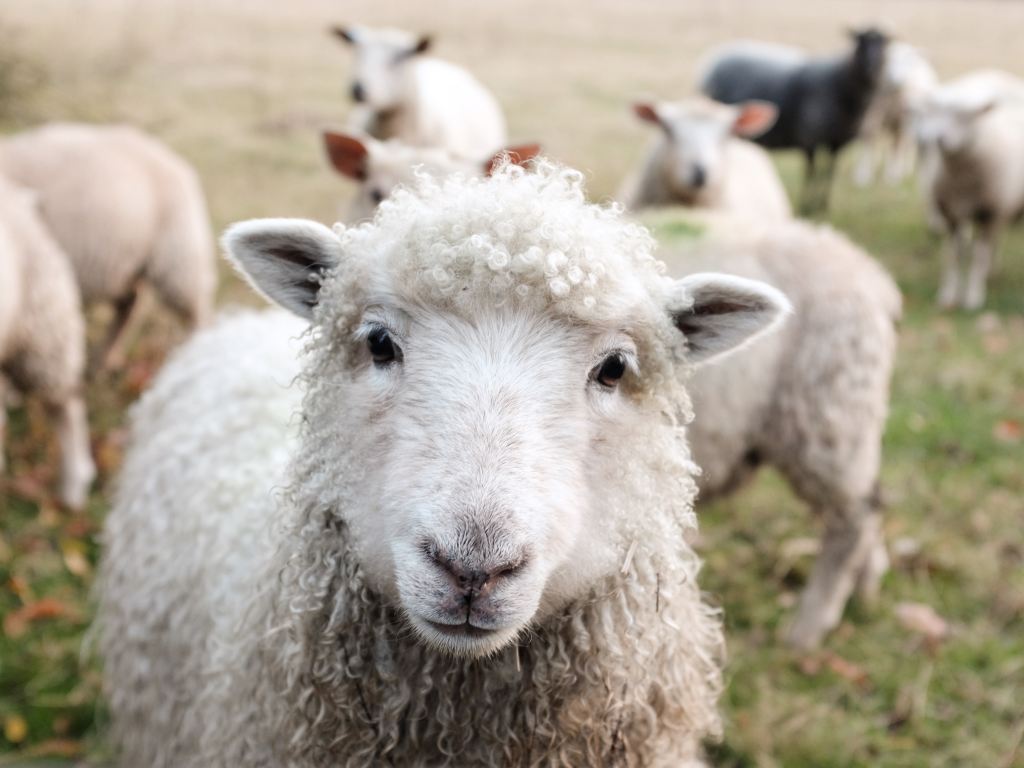
We know that the tenth and final plague on Egypt was the original Passover. God told the tribe of Israel, through Moses, to gather up enough lambs to feed the tribe, no more and no less. The lambs had to be pure and without blemish. They were kept separate until the appointed day and time. These lambs were then slaughtered. Their blood was used to mark the houses of those to be saved. The body was used to feed the tribe of Israel, those to be saved. Any leftovers were destroyed.
That night, God took the firstborn male of every Egyptian and their livestock. The Egyptian gods were also defeated. However, the firstborn males of the tribe of Israel were untouched. They were saved. It was the last straw for Pharaoh. When he lost his own firstborn son, he was finally broken and gave in to God’s will, chasing the Jewish people from his lands and even asked for our God to bless him!
The first commandment God gave the Jewish people was to observe Passover by fasting and feasting, in remembrance of Him and what He did for them, which is still practiced today. The Passover feast of Jewish tradition contains many symbolic foods. Bitter herbs represent the suffering of the tribe as slaves, salt water is served for the tears shed during slavery, and a piece of lamb to remember God’s love and protection (after the destruction of the Temple, it was changed to a bone).
Fast forward about 1400 years, to first century Jerusalem.
Jesus was the firstborn Son of God, His only son.
He was pure and without blemish.
He was sacrificed in order to save us.
He died during Passover.
We have new symbols and rituals, which we perform in remembrance of Him and what He did for us. As He told His disciples during their last meal together before the Crucifixion, the wine was a symbol of the blood He would shed for us. The bread was a symbol of His body, which was beaten, sliced open, and then killed, slaughtered, for us.
Our new Passover feast is known as Holy Communion.
Our new fasting is known as Lent, during which we symbolically give up something dear and take up something difficult but worthy and follow Him.
During this season of Passover, as we partake of the Holy Sacrament, let’s reflect on the reason we do these things. Let us bear in our hearts how much love God has for us, his chosen people. Let us remember Jesus and His sacrifice. Let us eat of His body. Let us drink His blood. Let us be renewed in the knowledge that He did these things for us, so we might follow His example of love. Let us rededicate our lives to Christ, so we may glorify Him in all we do. Let us reflect, in our own feeble ways, the life He lived.
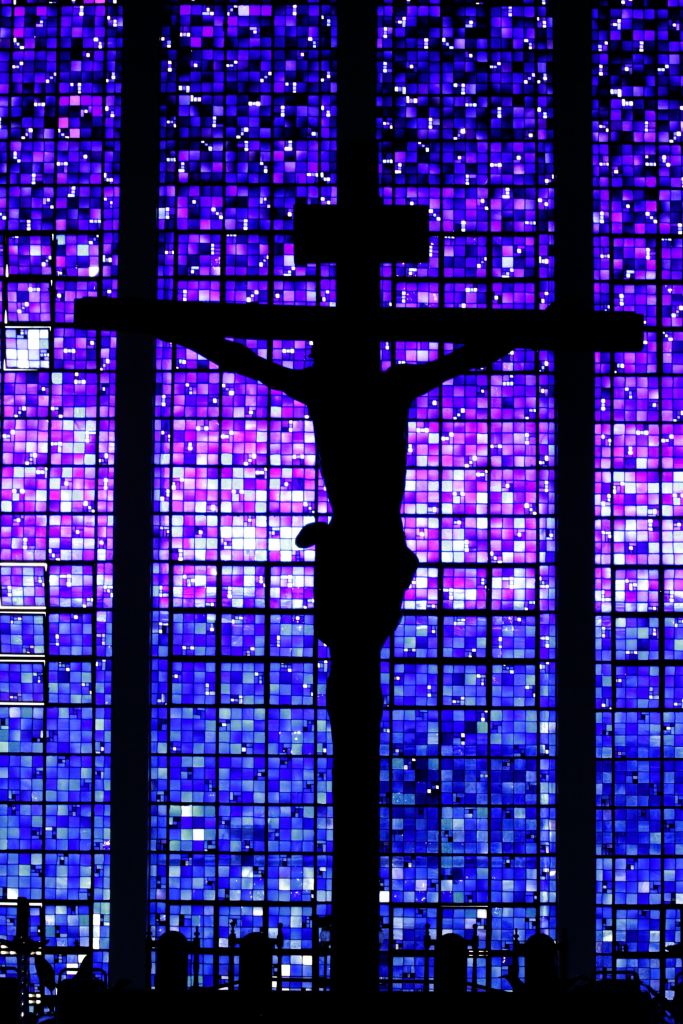
According to the Gospels, right before Jesus was arrested by the Romans, He begged God to take the cross from the path He was to walk, knowing it was the only way to teach us His final lessons. He knew how hard the next few days would be. At the end of that prayer, He chose to continue on that path anyway. He chose the hard stuff. He chose the cross, because it was God’s will.
We all face challenges, tests, and hardships. Let us bear our own symbolic crosses with the grace and dignity Jesus showed us when He took up the cross. Let us remember God is with us in everything we do, good and bad. Let us lean on Him. He will see us through anything and everything!
Prayer Focus
Those taking their first Holy Communion.
Prayer
Our Father, who art in heaven, who gave His only son so we might have a deep, personal relationship with You, we thank You for loving us. We thank You for showing us, in such a meaningful way, how You want us to live. We thank You for Your salvation through the blood of Jesus. Amen.
Final Thought
Jesus gave up everything for us. Let us be willing to give up everything for Him, according to His will.

 Spread the Love